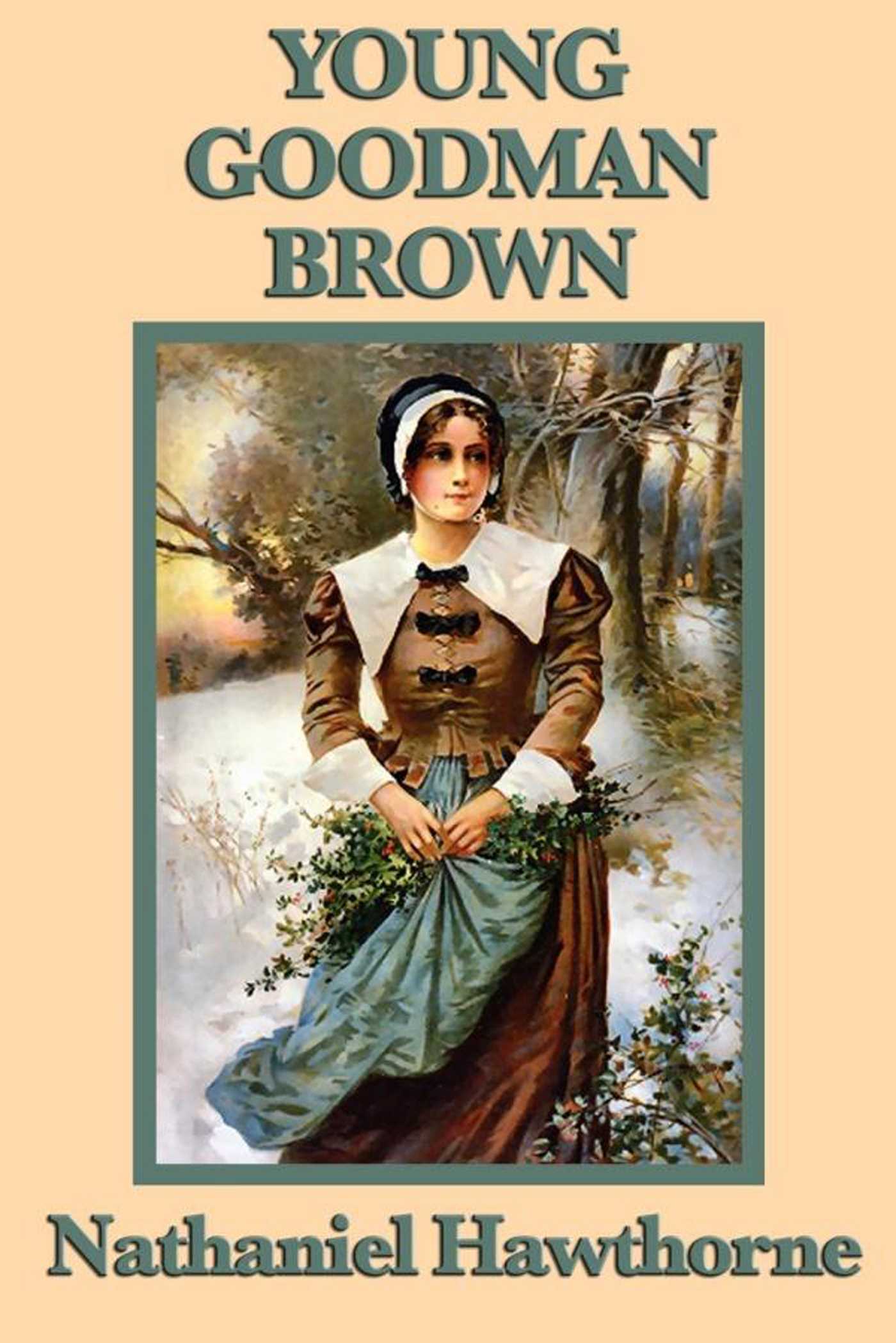
Young Goodman Brown Summary
Nathaniel Hawthorne • Short story
Young Goodman Brown Summary: Book, Characters, and Analysis by Nathaniel Hawthorne
Young Goodman Brown by Nathaniel Hawthorne is a short story that explores faith, hypocrisy, and the loss of moral certainty in Puritan New England. Written in 1835, the story functions as both a psychological tale and a moral allegory, examining how a single night’s experience can permanently alter a person’s perception of humanity.
This article provides a plot summary of Young Goodman Brown, along with an extended book summary, a detailed overview of the characters, and a literary analysis of the story, written with the same structure, depth, and narrative seriousness as The Great Gatsby.
Book Summary of Young Goodman Brown
At the beginning of the story, set in the historic site of Salem—famous for the Witch Trials and as a symbol of Puritan society—Hawthorne critiques the strict religious and moral codes of the time. The narrative opens at dusk, where the young man, Young Goodman Brown, prepares to leave his wife, Faith, for a mysterious nighttime journey into the forest. As her husband, Goodman Brown is emotionally connected to Faith, who pleads with him to stay, expressing fear and unease. Goodman Brown insists that he must go, promising to return by morning. From the outset, the forest is presented as a symbolic space—separate from the ordered, religious world of the village, where the church stands as the central institution of faith, righteousness, and social cohesion, and associated with temptation, secrecy, and moral danger.
As Goodman Brown travels deeper into the woods, he encounters a strange man who appears to be his guide. This figure resembles Goodman Brown himself but carries a staff shaped like a serpent, immediately invoking biblical imagery of deception and evil. Though Goodman Brown claims to be a righteous young man from a devout family, his guide reveals unsettling knowledge about Goodman Brown’s ancestors, stating that he knew Goodman Brown's father, and suggesting that Goodman Brown's father and others were involved in acts of violence and moral corruption, challenging the family's long-standing reputation for piety.
Along the path, Goodman Brown meets respected members of his community—figures known for piety and moral authority—secretly traveling in the same direction. Among them is Goody Cloyse, an old woman and a respected woman in the village, who is shockingly revealed to be a witch and a participant in the devil’s ceremony. Each encounter erodes his confidence in the purity of those he has trusted, including religious leaders and virtuous townspeople. Goodman Brown becomes increasingly conflicted, torn between his belief in human goodness and the growing evidence of universal hypocrisy, as the influence of religion, the fear of God, and the hope for heaven are all called into question.
The journey culminates in a dark clearing where a satanic ritual appears to be taking place. Members of the community gather around an altar, preparing to initiate new converts into the fellowship of evil. Goodman Brown sees figures resembling his neighbors, teachers, and elders. Most devastatingly, he believes he sees Faith among them, her pink ribbons fluttering down from the sky—a powerful symbol of innocence lost.
At the moment when Goodman Brown appears ready to accept the corruption of the world and join the ceremony, he cries out to Faith to resist evil. Instantly, the scene dissolves. Goodman Brown finds himself alone in the forest, unsure whether the events he witnessed were real or a dream.
He returns to Salem at dawn, but he is profoundly changed. Though the village, its church, and its people appear unchanged, Goodman Brown is shocked and can no longer trust anyone—not his neighbors, not his religious leaders, not even his wife. The misery of his disillusionment endures, as he lives the rest of his life in suspicion and bitterness, unable to reconcile faith, God, and the promise of heaven with the possibility of human imperfection and the failures of religion. The story ends with Goodman Brown dying a despairing man, and in his dying hour, no hopeful verse is inscribed on his tombstone, reflecting the loss of faith and the darkness that overtook his soul.
Main Characters in Young Goodman Brown
Young Goodman Brown
The protagonist. Goodman Brown begins as a confident believer in moral absolutes. His journey reveals his inability to accept human complexity. His downfall is not sin itself, but the refusal to reconcile faith with imperfection.
Faith
Goodman Brown’s wife. Symbolically named, Faith represents innocence, spiritual belief, and emotional trust. Her perceived corruption devastates Goodman Brown’s worldview.
The Stranger
A devil-like figure who guides Goodman Brown through the forest. He represents temptation, inherited sin, and the idea that evil is deeply rooted in human history.
The Townspeople
A collective character symbolizing societal hypocrisy. Their presence suggests that moral corruption is widespread rather than exceptional.
Character Relationships in Young Goodman Brown
The relationships between characters in Young Goodman Brown are central to Nathaniel Hawthorne’s exploration of human nature and the hidden complexities of Puritan society. At the heart of the story is the bond between Goodman Brown and his wife, Faith. More than just a loving spouse, Faith embodies Goodman Brown’s spiritual convictions and his hope for goodness in the world. Her vulnerability to the temptations of the devil worshippers in the forest becomes a turning point for Goodman Brown, as he grapples with the possibility that even those closest to him are not immune to sin.
The older man Goodman Brown meets in the woods—implied to be the devil—serves as both a tempter and a mirror, revealing the darker impulses that exist within Goodman Brown and the community at large. This figure’s knowledge of Goodman Brown’s father and grandfather, as well as his familiarity with the supposed good Christians of Salem, underscores the idea that sin and hypocrisy are woven into the very fabric of society. The devil’s influence exposes the unsettling truth that even the most respected members of the community, such as Goody Cloyse and Deacon Gookin, may secretly participate in evil acts.
Goodman Brown’s encounters with these figures—his wife, the older man, Goody Cloyse, and Deacon Gookin—force him to confront the duality of human nature. The story suggests that beneath the surface of piety and respectability, there lies a capacity for darkness and moral weakness. Hawthorne uses these relationships to illustrate how suspicion and the loss of faith can isolate an individual from the rest of society, leaving Goodman Brown unable to trust even those he once admired. Ultimately, the web of relationships in Young Goodman Brown serves as a powerful commentary on the destructive power of doubt, the pervasiveness of sin, and the fragile nature of trust within a close-knit community.
Analysis of Young Goodman Brown
Major Themes
Faith vs. Cynicism
The story examines the danger of absolutist faith. Goodman Brown’s inability to accept moral complexity leads him to reject faith entirely.
Hypocrisy and Hidden Sin
Hawthorne suggests that public piety often conceals private corruption, particularly in rigid moral societies.
Loss of Innocence
Goodman Brown’s journey marks a permanent psychological break. Once innocence is lost, it cannot be recovered.
Psychological Isolation
By withdrawing trust from everyone, Goodman Brown isolates himself, demonstrating that moral rigidity can be as destructive as immorality.
Symbolism and Literary Devices
- The forest symbolizes moral ambiguity and the unconscious mind.
- Faith’s pink ribbons represent innocence and emotional trust.
- The serpent staff invokes temptation and inherited sin.
- Night and darkness reflect moral uncertainty.
- Ambiguous reality leaves the reader questioning whether the journey was literal or psychological.
Hawthorne’s use of allegory allows the story to function on both a literal and symbolic level, intensifying its moral impact.
Literary Style and Structure of Young Goodman Brown
Nathaniel Hawthorne’s Young Goodman Brown is celebrated for its masterful literary style and innovative structure, which together create a haunting and thought-provoking narrative. The story takes place in Salem Village, New England, during the era of the witch trials—a setting that immediately evokes a sense of historical tension and moral scrutiny. Hawthorne’s use of allegory and symbolism is central to the story’s impact: the pink ribbon worn by Faith, the serpent-shaped staff carried by the devil, and the shadowy forest all serve as powerful representations of innocence, temptation, and the unknown depths of human nature.
The structure of Young Goodman Brown is deliberately ambiguous, blurring the boundaries between reality and dream. As Goodman Brown ventures into the dark woods, the narrative shifts between the tangible world of Salem and the surreal, nightmarish events of the forest. This uncertainty leaves both Goodman Brown and the reader questioning what truly happened during that fateful night—was it all a dream, or did Goodman Brown witness the hidden sins of his community? This ambiguity is a hallmark of Hawthorne’s style, inviting readers to reflect on the nature of evil, the limits of perception, and the consequences of lost faith.
Hawthorne’s prose is rich with imagery and foreshadowing, heightening the sense of dread and foreboding that permeates the story. The forest, with its twisting trees and enveloping darkness, becomes a symbol of the unknown and the subconscious, while the recurring motif of the pink ribbon underscores the fragility of hope and innocence. Through these literary devices, Hawthorne explores the psychological turmoil of his protagonist, delving into the conflict between good and evil that exists within every person.
Overall, the literary style and structure of Young Goodman Brown exemplify Hawthorne’s skill as a writer and his deep understanding of human nature. By weaving together symbolism, allegory, and psychological insight, Hawthorne crafts a story that continues to resonate with readers, offering a timeless meditation on sin, faith, and the complexities of the human soul.
Author Background and Historical Context
Nathaniel Hawthorne was deeply influenced by Puritan history, including his own ancestors’ involvement in the Salem witch trials. His writing frequently critiques moral absolutism and religious hypocrisy. Young Goodman Brown reflects Hawthorne’s skepticism toward rigid moral systems that deny human complexity.
Young Goodman Brown: Impact and Legacy
The story remains one of Hawthorne’s most studied works, frequently analyzed for its psychological depth, symbolic richness, and moral ambiguity. It is a foundational text in American Romanticism and moral allegory.
Who Should Read Young Goodman Brown by Nathaniel Hawthorne
- Readers interested in American Romanticism
- Students studying allegory and symbolism
- Those exploring themes of faith, doubt, and hypocrisy
- Readers interested in psychological and moral fiction
Level up your reading with Peech
Boost your productivity and absorb knowledge faster than ever.
Start now