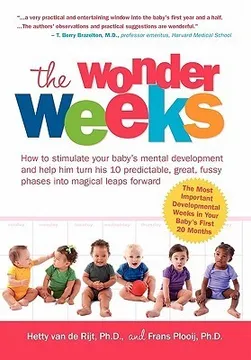
The Wonder Weeks
Hetty van de Rijt, Frans X. Plooij • Self-help, Psychology
The Wonder Weeks by Hetty van de Rijt — Book Summary, Key Developmental Leaps & Analysis
The Wonder Weeks by Hetty van de Rijt and Frans Plooij (often referred to as 'de Rijt and Plooij') is a bestselling parenting guide based on their research in child development and infant development during the first 20 months of life. Xaviera Plas-Plooij, an expert in child development, has played a key role in revising and modernizing the book, building on the legacy of van de Rijt and Plooij. Frans Plooij, also known as Frans X. Plooij, and Hetty van de Rijt (van de Rijt Plooij) are recognized for their scientific studies on regression periods and developmental leaps in infants. The book outlines predictable developmental leaps and regression periods, systematically presenting each stage to offer parents insights into their baby's growth. Serving as a comprehensive guide to your baby's development, behavior, and sleep, the book offers parents insights and practical advice to help them navigate each phase.
This article includes a clear book summary, explanation of the 10 developmental leaps, and practical insights for parents seeking to understand and support their baby’s growth.
Summary of The Wonder Weeks
The Wonder Weeks explains that babies go through predictable periods of developmental change, which the authors call “mental leaps.” These leaps, also referred to as baby leaps, developmental leaps, and sometimes a leap forward for baby, occur when the baby’s brain rapidly develops new abilities. During these times, infants may become fussier, clingier, and experience sleep disruptions — leading many parents to worry that something is wrong. These regression periods and fussy phases are closely linked to baby's mental and cognitive development, and are a normal part of baby's development.
The book reassures caregivers that this behavior is normal. Each difficult phase is followed by a “sunny week”, a predictable period of smooth development after the stormy weeks, where the baby shows newly learned skills such as:
- Improved motor coordination
- Stronger communication cues
- Cognitive problem-solving
- Social and emotional awareness
These are examples of developmental milestones and important milestones. Many babies experience a growth spurt during these times, which can also affect baby's behavior.
By anticipating these milestones — which happen at roughly the same ages for most infants — parents can better support their child and feel more confident during tough parenting weeks. The book explains how babies navigate each wonder week, and offers guidance for parents to help babies navigate these phases, turning them into positive developmental outcomes.
The guide includes:
- Week-by-week developmental schedules
- Activities to help support new skills, including fun games and suggested games tailored to each phase
- Real parent stories, experiences from other parents, and practical examples
- Charts and checklists for tracking progress
- References to a baby sleep site for additional sleep tips
The book promotes a weeks a stress free approach, while also addressing the wonder weeks a stress that can occur during these leaps. For sleep disruptions, the book discusses the importance of respecting natural sleep patterns over sleep training, and provides a couple of sleep tips to help manage changes. Parents are encouraged to take a deep breath during challenging phases, knowing that these are temporary and part of their child's growth.
The overall goal is to help parents understand behavior patterns, reduce stress, and celebrate growth at every step.
Calculating Developmental Age
Understanding your baby’s developmental age is a key part of the Wonder Weeks approach, offering parents insights into their child’s unique growth and neurological development. Unlike simply tracking your baby’s progress from their birth date, the Wonder Weeks book and app recommend using your baby’s due date to calculate their developmental age. This is because a baby’s brain development starts before birth, and every child’s journey unfolds at its own pace.
To determine your baby’s developmental age, start counting from their due date rather than their actual birth date. This small adjustment can make a big difference, especially for babies born early or late. By focusing on developmental age, parents can more accurately anticipate when their baby might experience fussy periods, sleep regressions, or a leap forward in mental development.
The Wonder Weeks app and book outline this process in easy to understand terms, making it a stress free guide for new parents. With practical advice and great ideas for supporting your baby’s mental and emotional growth, these resources help you navigate each wonder week with confidence. By knowing your baby’s developmental age, you can better prepare for stormy weeks, understand changes in your baby’s behavior, and celebrate each magical leap forward.
This approach is especially helpful when it comes to baby sleep. Many sleep problems and regressions are linked to developmental leaps, and understanding your baby’s developmental age can help you create effective sleep strategies. The Wonder Weeks book details how sleep patterns often shift during leaps, and offers parents practical suggestions for making these transitions as smooth as possible.
Remember, every baby is unique, and age-related fluctuations are normal. Calculating developmental age is a helpful tool, not a strict schedule. By using the Wonder Weeks concept and resources, parents can gain valuable insights into their baby’s mental development, making the journey through each leap a little more stress free and a lot more rewarding.
The 10 Developmental Leaps in Baby's Mental Development Explained
Some of the research behind The Wonder Weeks was informed by studies of infant development in free living chimpanzees, providing valuable insights into natural patterns of behavioral change.
Here are the major mental leaps outlined in The Wonder Weeks:
Leap 1 — The World of Changing Sensations (Around Week 5)
Baby becomes more alert, responds more to environment, starts smiling socially.
Leap 2 — The World of Patterns (Around Week 8)
Recognizing simple patterns in light, sound, and movement. More active eye contact and cooing.
Leap 3 — The World of Smooth Transitions (Around Week 12)
Improved motor skills, smoother movements, and early hand-eye coordination.
Leap 4 — The World of Events (Around Week 19)
Understanding cause and effect. Babies may grab objects and show early anticipation skills.
Leap 5 — The World of Relationships (Around Week 26)
Attachment behaviors intensify. Baby understands distance and may show separation anxiety.
Leap 6 — The World of Categories (Around Week 37)
Sorting and grouping objects mentally. Noticing small differences in faces, toys, and textures.
Leap 7 — The World of Sequences (Around Week 46)
Recognizing order in tasks. Simple problem-solving begins (stacking blocks, putting objects together).
Leap 8 — The World of Programs (Around Week 55)
Baby starts planning actions and performing multi-step activities.
Leap 9 — The World of Principles (Around Week 64)
Understanding rules — what is allowed and what is not — leading to tantrums and big emotions.
Leap 10 — The World of Systems (Around Week 75)
Toddlers begin seeing how ideas connect. Early language surges and imaginative play appear.
Why Babies Cry More During Leaps
During leaps, babies:
- Experience the world in a brand-new way
- Feel overwhelmed by sensations and emotions
- Seek closeness and reassurance from caregivers
These phases are temporary — and a sign of growth, not regression.
Parenting Benefits, Practical Advice & Insights
The Wonder Weeks helps caregivers:
✔ Predict difficult weeks instead of feeling frustrated ✔ Support learning with age-appropriate activities ✔ Understand sleep disruptions as developmental, not behavioral ✔ Recognize and celebrate new skills
The authors emphasize empathy and responsiveness — helping strengthen emotional bonds.
Writing Style & Approach
The book blends:
- Scientific research
- Parenting psychology
- Clear charts and practical examples
It is structured for quick reference as babies reach each leap — making it a staple on many parenting bookshelves.
Reception & Impact
The Wonder Weeks has become an international phenomenon, especially praised by:
- New parents seeking guidance
- Pediatric professionals
- Parenting communities online
Many appreciate its comforting message: challenging behavior is normal and meaningful.
Who Should Read The Wonder Weeks?
Highly recommended for:
- First-time parents
- Caregivers of babies 0–20 months
- Anyone wanting to understand baby behavior better
It is especially useful alongside a baby tracking app or journal.
Level up your reading with Peech
Boost your productivity and absorb knowledge faster than ever.
Start now