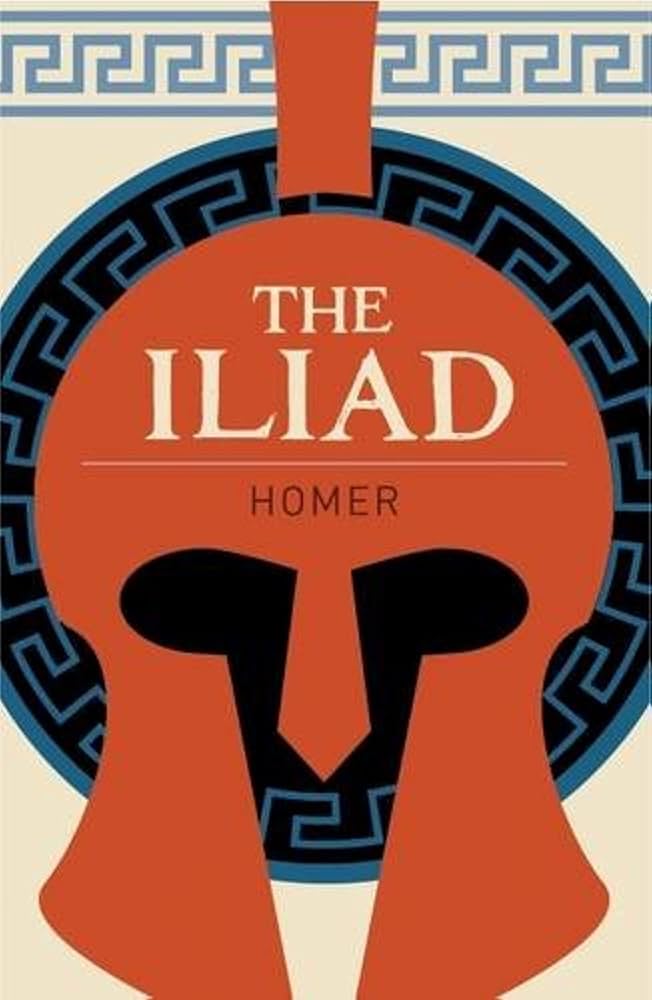
The Iliad Summary
Homer • Epic poetry
The Iliad Summary: Book, Characters, and Analysis by Homer
The Iliad by Homer is one of the foundational works of Western literature and a cornerstone of epic poetry. Set during the final weeks of the Trojan War, the poem explores heroism, rage, honor, fate, and the human cost of war. This article provides an extended book summary, a detailed overview of the characters, and a critical analysis of The Iliad, focusing on its themes, narrative structure, and cultural significance.
Book Summary of The Iliad by Homer
The Iliad does not recount the entire Trojan War but instead focuses on a brief, intense period near its end, centering on the destructive rage of the Greek warrior Achilles, also known as Peleus' son Achilles. The epic opens with a conflict between Achilles and King Agamemnon, the leader of the Greek forces. The dispute arises over the maidens Chryseis and Briseis, who are taken as war prizes during raids. When Agamemnon decides to return Chryseis to her father to end a plague—after Chryses prays to Apollo for help—he then seizes Achilles’ war prize, Briseis. This act, known as 'Agamemnon takes Briseis,' deeply dishonors Achilles. Agamemnon threatens Achilles and asserts his authority, while Achilles refuses to fight and withdraws from battle, highlighting his pride and sense of honor. Achilles agrees to abstain from fighting, and his absence has a devastating impact on the Greek army’s morale and effectiveness.
Without Achilles, the Greek army begins to falter. The Trojan forces, led by the noble prince Hector, grow stronger and organize in the Trojans camp. The Trojans push the Greeks back toward their ships, and as the battle rages, the Trojans break through the Achaean defenses. This Trojan advance threatens to destroy the Greek fleet and marks a turning point in the war. During these struggles, Greek leaders and warriors beg Agamemnon for action or mercy to save their forces.
As the war intensifies, the gods fight among themselves, taking sides and intervening in mortal affairs from Mount Olympus. The goddess Athena, in particular, supports the Greeks, intervening to prevent Achilles from killing Agamemnon and guiding Greek strategy. Divine intervention is a constant, reinforcing the idea that human lives are subject to the will and rivalries of the gods.
Heroic exploits continue as Odysseus and Diomedes conduct a daring night raid on the Trojan camp, killing many Trojans and wounding Aeneas. During the chaos, Diomedes nearly kills Aeneas, and Aphrodite drops Aeneas to safety after he is injured. The Greeks also launch a full-scale attack on Troy, spurred by the gods' influence.
A temporary truce is called for the duel between Paris and Menelaus, known as the fight Menelaus, but the conflict soon resumes. Both Agamemnon and other leaders are contrasted in their actions and relationships with the gods and warriors.
Achilles’ closest companion, Patroclus, dons Achilles’ armor and enters the battle to inspire the Greeks. Although he succeeds temporarily, Patroclus is ultimately killed by Hector. Achilles is devastated and seeks to avenge Patroclus, transforming his rage from prideful resentment into all-consuming grief and vengeance. Achilles learns the true cost of his anger and the pain of loss.
Achilles agrees to return to battle. He dons his new armor, calls his Myrmidons to arms, and approaches Hector for a final confrontation. In the climactic duel, Hector refuses to flee and bravely faces Achilles. Despite his courage, Hector loses the fight, and Achilles kills Hector outside the walls of Troy. Achilles then desecrates Hector's body, dragging it behind his chariot, which becomes a powerful symbol of lost honor and the brutality of war.
The epic concludes not with victory, but with reconciliation. King Priam, Hector’s father, bravely enters the Greek camp to beg Achilles for his son’s body. Moved by Priam’s grief and reminded of his own father, Achilles returns Hector’s body, restoring a sense of shared humanity amid the devastation of war. The return of Hector's body for proper burial underscores the themes of respect, grief, and reconciliation at the heart of the Iliad.
Main Characters in The Iliad
Achilles
Known as 'Peleus' son Achilles', he is renowned for his divine lineage and heroic status. The greatest Greek warrior, his rage and grief drive the epic’s central conflict. Achilles embodies both heroic excellence and destructive pride. Through the events of the Iliad, Achilles learns important lessons about loss, honor, and humanity.
Hector
Prince of Troy and its greatest defender, Hector is the son of King Priam (Hector's father). Noble, dutiful, and compassionate, Hector represents honor and responsibility. When faced with Achilles, Hector refuses to flee and instead chooses to confront him in battle. Ultimately, Hector loses his final duel with Achilles, marking a significant turning point in the Trojan War.
Agamemnon
King Agamemnon is the leader of the Greek forces. His arrogance and misuse of authority spark the conflict with Achilles. Agamemnon decides to claim Briseis, Achilles' war prize, which leads to a major rift between the two. Agamemnon threatens other leaders and warriors, including Achilles, intensifying the tension among the Greeks. Both Agamemnon and Achilles play central roles in the narrative, but while Agamemnon asserts his authority through command and threats, Achilles challenges him through defiance and personal honor.
Patroclus
Achilles’ closest companion. His death serves as the emotional turning point of the epic. Achilles is driven to avenge Patroclus by seeking out Hector, the Trojan prince responsible for his friend's death.
Priam
King of Troy. His courage and dignity in grief offer a powerful counterpoint to the brutality of war.
Character Conflicts in The Iliad
The Iliad, an epic poem attributed to Homer, is a tale of the Trojan War, a conflict between the Trojan army and the Achaean army, a confederation of Greek cities. At the heart of this war are the character conflicts that drive the plot and shape the destiny of the heroes involved. One of the most pivotal conflicts is between Achilles, the greatest warrior of the Achaeans, and Agamemnon, the leader of the Achaean forces. This conflict begins when Agamemnon refuses to return Chryseis, a maiden captured during the war, to her father, Chryses, who prays to Apollo for her return. Apollo sends a plague upon the Achaean camp, killing many soldiers, which leads to a deeper rift between Achilles and Agamemnon.
Achilles, feeling dishonored by Agamemnon’s refusal to return Chryseis and his subsequent demand for Briseis, another maiden who was awarded to Achilles, becomes enraged. This enrages Achilles, leading him to withdraw from the battle and ask his mother, Thetis, a minor goddess, to persuade Zeus to aid the Trojans. Zeus agrees, planning to fulfill his promise to Thetis, which shifts the tide of the war in favor of the Trojans. The Trojan prince, Paris, who started the war by abducting Helen from Menelaus, the Achaean king, proposes a duel with Menelaus to end the conflict, but the duel is inconclusive, and the war resumes.
As the war intensifies, Hector, the son of King Priam and the greatest warrior of the Trojans, distinguishes himself in battle. However, his fate is sealed when he kills Patroclus, Achilles’ close friend, which leads to a fierce confrontation between Hector and Achilles. In a dramatic duel, Achilles kills Hector, avenging Patroclus’ death. The Trojans grieve the loss of their hero, and King Priam, Hector’s father, begs Achilles to return his son’s body. Achilles, moved by Priam’s plea, agrees to return Hector’s body, marking a moment of humanity amidst the brutality of war.
The character conflicts in The Iliad are not limited to the mortal characters. The gods also play a significant role, often intervening in mortal affairs and influencing the outcome of the war. Zeus, the king of the gods, decides to aid the Trojans, while Athena and Hera support the Achaeans. The gods’ involvement adds a layer of complexity to the conflicts, highlighting the interplay between fate, divine intervention, and human action.
The Iliad plot summary reveals a complex web of character conflicts, driven by themes of honor, pride, and revenge. The epic poem explores the human condition, showcasing the flaws and virtues of its characters. Through the lens of the Trojan War, Homer’s Iliad provides a profound insight into the nature of conflict, the human cost of war, and the enduring power of honor and pride. As the story unfolds, the characters’ conflicts lead to a tragic conclusion, underscoring the devastating consequences of unchecked rage and the pursuit of glory.
In the end, the character conflicts in The Iliad serve as a reminder of the enduring power of human emotions and the devastating consequences of war. The epic poem’s exploration of character conflicts continues to resonate with readers, offering a profound insight into the human condition and the complexities of conflict. As the Iliad begins to conclude, the character conflicts reach a climax, with Achilles’ rage and grief ultimately leading to a moment of redemption and closure. The Iliad’s character conflicts remain a testament to the enduring power of Homer’s epic poem, a work that continues to captivate readers with its profound exploration of the human experience.
Analysis of The Iliad by Homer
Major Themes
Rage and Its Consequences
The epic begins and ends with Achilles’ anger, showing how unchecked emotion leads to destruction. After being dishonored by Agamemnon, Achilles refuses to fight, withdrawing from battle and causing a crisis among the Greeks. Achilles' absence severely weakens the Greek army's morale and effectiveness, shifting the tide of the Trojan War in favor of the Trojans. Eventually, Achilles agrees to return to battle, marking a crucial turning point in the narrative and demonstrating the far-reaching consequences of his rage and decisions.
Honor and Glory
Warriors fight for reputation and legacy, believing that honor is worth the cost of life itself. Achilles is driven to avenge Patroclus, seeking to restore his friend's honor and his own by confronting Hector. The climax of this pursuit is when Achilles kills Hector, a pivotal moment that defines his quest for glory. The treatment of Hector's body—dragged by Achilles in anger, then returned to Priam for proper burial—underscores the importance of honor, funeral rites, and reconciliation in the epic.
Fate and Mortality
Even the greatest heroes are subject to fate. Achilles learns about the limits of human power and the inevitability of fate through his experiences in the war. Hector loses his life despite his heroism, underscoring the theme of mortality. Death is inevitable and deeply human.
Epic Style and Literary Devices
Homer employs extended similes, formal speeches, repetition, and divine intervention. The oral tradition shapes the poem’s rhythmic and mnemonic structure.
Notable narrative techniques include the vivid depiction of dramatic battle scenes, such as Diomedes' attempt to kill Aeneas, and the moment when Aphrodite drops Aeneas to safety, highlighting the interplay between mortals and gods. The epic also features the daring night raid by Odysseus and Diomedes, showcasing their heroism and strategic prowess as key Greek warriors.
Author Background and Historical Context of the Trojan War
Homer is traditionally regarded as the author of The Iliad, though its origins lie in oral storytelling. The epic reflects Bronze Age warrior culture and ancient Greek values.
The Iliad: Impact and Legacy
The Iliad shaped epic storytelling, hero narratives, and Western literary tradition, influencing writers for millennia.
Who Should Read The Iliad by Homer
- Readers interested in classical literature
- Students of mythology and epic poetry
- Those exploring war, honor, and human emotion
Level up your reading with Peech
Boost your productivity and absorb knowledge faster than ever.
Start now