Summary of The Epic of Gilgamesh
na • Epic poem, Poetry, Epic Poetry
The Epic of Gilgamesh – Book Summary, Characters, and Analysis
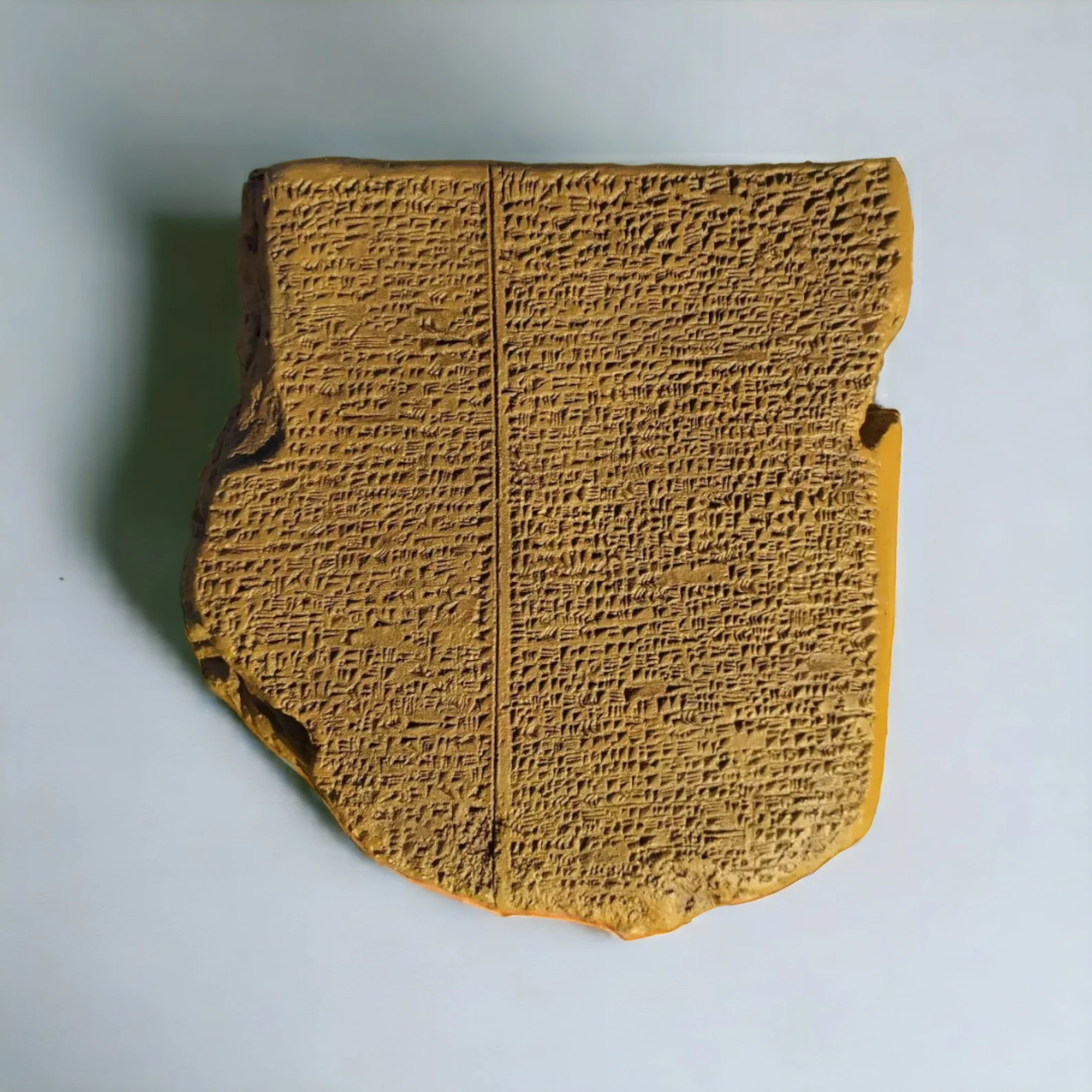
The Epic of Gilgamesh is one of the oldest surviving works of literature in human history. Originating in ancient Mesopotamia and preserved on clay tablets written in cuneiform, this epic poem explores timeless themes such as friendship, power, mortality, and the human search for meaning.
The epic begins by introducing Gilgamesh as a powerful but flawed king of Uruk, whose divine origins and early misdeeds set the stage for his journey and transformation.
This article provides a comprehensive book summary, detailed character breakdown, and literary analysis to help readers understand why The Epic of Gilgamesh remains profoundly relevant thousands of years after it was written.
Book Summary of The Epic of Gilgamesh
The Epic of Gilgamesh tells the story of Gilgamesh, the mighty king of the ancient city of Uruk, whose strength and authority are unmatched. Described as two-thirds divine and one-third human, Gilgamesh possesses extraordinary power but lacks wisdom and restraint. At the beginning of the epic, he rules as a tyrant, abusing his people and indulging his desires without regard for others. His unchecked behavior causes suffering throughout Uruk, leading the citizens to pray to the gods for intervention, and the gods heard their pleas.
In response, the gods create Enkidu, a powerful being formed from clay and placed in the wilderness to counterbalance Gilgamesh. Introducing Enkidu as wild Enkidu, he lives among animals, free from civilization, representing raw nature and innocence. Eventually, he is introduced to human society through a woman, Shamhat, who teaches him language, customs, and intimacy. Shamhat also teaches Enkidu to eat human food, marking a turning point in his transformation, as eating human food symbolizes his entry into civilization and the adoption of human ways. Enkidu's journey from wildness to civilization includes his initial life with animals, his seduction and education by Shamhat, learning to eat human food, and his acceptance into the community of Uruk.
When Enkidu arrives in Uruk, he confronts Gilgamesh directly. The two engage in a fierce and evenly matched battle that shakes the city. Rather than ending in death, the conflict leads to mutual respect and a deep bond. Their rivalry transforms into one of the earliest and most powerful depictions of friendship in literature. Through this relationship, Gilgamesh begins to change, becoming less cruel and more self-aware.
Seeking glory and lasting fame, Gilgamesh convinces Enkidu to join him on a dangerous quest to the Cedar Forest, guarded by the monstrous Humbaba. Before facing Humbaba, Gilgamesh's dreams are interpreted by Enkidu, providing guidance and insight into their journey. Despite ominous dreams and warnings, the two heroes defeat Humbaba with the help of the sun god Shamash. After their victory, they spread Humbaba's entrails on the sacred mountain. While the victory brings fame, it also angers the gods, who view the act as an act of human arrogance and overreach. The gods respond to their actions with divine displeasure.
After returning to Uruk, Gilgamesh rejects the romantic advances of the goddess Ishtar, insulting her by recounting the suffering of her former lovers. Enraged, Ishtar sends the Bull of Heaven to punish Gilgamesh and the city. Once again, Gilgamesh and Enkidu work together to defeat the divine threat, with Enkidu kill the Bull of Heaven. This second act of defiance seals their fate.
As punishment, the gods decree to sentence Enkidu to death. He falls gravely ill and slowly weakens, expressing fear, anger, and despair before ultimately accepting his fate. Before he dies, Enkidu's dream serves as a prophetic warning about the afterlife and his impending death. Enkidu dies, and Enkidu's death devastates Gilgamesh, forcing him to confront death not as an abstract idea but as a personal and irreversible reality.
Overcome with grief and terror at his own mortality, Gilgamesh mourns Enkidu. He abandons his royal life and embarks on a desperate quest to escape death itself. Gilgamesh's quest takes him across vast deserts and dangerous waters in search of Utnapishtim, the only human granted immortality by the gods after surviving a great flood. Along the way, Gilgamesh finds Utnapishtim and learns about the flood and the nature of immortality. Utnapishtim recounts the flood story and explains that eternal life is a divine exception, not a reward humans can earn.
Although Gilgamesh briefly learns of a plant that can restore youth, it is ultimately lost before he can use it. Gilgamesh fails to obtain immortality, reinforcing the epic’s central message. He is forced to confront his own death and the reality of human mortality. Gilgamesh returns to Uruk transformed, having gained wisdom and acceptance. He comes to understand that meaning lies not in eternal life, but in human achievement, responsibility, and legacy.
The story of Gilgamesh is ultimately about seeking immortality and the acceptance of human limitations. The gods respond to human actions throughout the epic, shaping the destinies of mortals and highlighting the enduring themes of friendship, mortality, and the search for meaning.
Main Characters in The Epic of Gilgamesh
Gilgamesh
The protagonist and king of Uruk. Initially arrogant and oppressive, Gilgamesh evolves into a wiser and more compassionate ruler through friendship, loss, and self-reflection. His fear of death drives the epic’s central conflict.
Enkidu
Created by the gods as Gilgamesh’s equal, Enkidu begins as a wild man living in harmony with nature. His friendship with Gilgamesh humanizes both characters. Enkidu’s death becomes the emotional turning point of the story.
Utnapishtim
A wise and distant figure who survived the great flood and was granted immortality. He represents divine knowledge and the unreachable ideal of eternal life.
Ishtar
The goddess of love and war. Her rejection exposes Gilgamesh’s growing independence from divine authority and highlights the tension between humans and gods.
Shamash
The sun god and protector of justice, Shamash aids Gilgamesh during his quests and represents moral balance and divine fairness.
The Babylonian Version
Analysis of The Epic of Gilgamesh
Major Themes
Mortality and the Fear of Death
The epic’s most enduring theme is the inevitability of death. Gilgamesh’s desperate quest for immortality reflects a universal human anxiety, making the story timeless and deeply relatable.
Friendship and Personal Transformation
The relationship between Gilgamesh and Enkidu is the emotional heart of the epic. Through friendship, Gilgamesh learns empathy, humility, and responsibility.
Civilization vs. Nature
Enkidu’s transformation from wild man to civilized human highlights the tension between natural freedom and societal order, a theme central to early human identity.
Literary Devices and Writing Style
The epic relies on repetition, symbolic journeys, prophetic dreams, and divine intervention. Its heroic structure and mythic imagery influenced later epic literature, including The Iliad and The Odyssey.
Recent authoritative translations and scholarly works on The Epic of Gilgamesh are published by Yale University Press.
Symbolism and Imagery
The Babylonian version of the Epic of Gilgamesh stands as a monumental achievement in the spiritual and literary history of ancient Mesopotamia. Crafted on clay tablets in cuneiform script, this epic poem not only preserves the adventures of Gilgamesh, king of Uruk, but also weaves a tapestry of symbolism that reflects the beliefs and values of southern Mesopotamia during the third millennium BCE.
Central to the Babylonian version is the interplay between human beings and the divine. The sun god Shamash, revered as a source of justice and guidance, plays a pivotal role in Gilgamesh’s journey, offering protection and wisdom as the hero and his companion Enkidu venture into the perilous cedar forest. The gods create Enkidu, a wild man, to challenge and ultimately humanize Gilgamesh, embodying the tension between untamed nature and the order of civilization—a theme deeply rooted in Sumerian mythology and culture.
Symbolism flourishes throughout the epic. Gilgamesh’s rejection of the goddess Ishtar’s advances is more than a personal slight; it represents the king’s struggle for autonomy against the will of the gods, a motif that echoes the broader human quest for meaning and self-determination. Enkidu interprets Gilgamesh’s dreams, serving as a bridge between the mortal and the divine, and foreshadowing the dangers that lie ahead. The temple prostitute who introduces Enkidu to human society symbolizes the transformative power of love, knowledge, and civilization.
The quest for eternal life is at the heart of the Babylonian version. After Enkidu’s death—a profound meditation on the fragility of human life—Gilgamesh embarks on a journey that leads him to Utnapishtim, the immortal survivor of the great flood. Utnapishtim tells Gilgamesh the flood myth, a narrative that predates and parallels the story of Noah in the Hebrew Bible. This flood myth, inscribed on Babylonian tablets, underscores the vulnerability of humanity before the many gods and the unpredictable forces of nature.
The epic’s imagery is vivid and enduring: the sacred cedar forest, the mighty Euphrates rivers, the dream tablet, and the perilous journey to the edge of the world. The goddess Ninsun, Gilgamesh’s mother, and the mother goddess archetype, further root the story in the religious traditions of ancient Sumer. The old Babylonian version, with its unique structure and poetic style, highlights the literary achievement of Sumerian poets and scribes, whose works have survived for millennia.
The historical king Gilgamesh, believed to have ruled during the third dynasty of Uruk, is immortalized not only as a legendary hero but as a symbol of the Sumerian kings’ divine mandate. The epic’s preservation on clay tablets, many of which are now housed in the British Museum, is a testament to the enduring legacy of Sumerian culture and the power of myth to shape civilizations.
Scholars such as Samuel Noah Kramer have illuminated the significance of the Epic of Gilgamesh in the context of ancient Sumer and its influence on later cultures, including Greek culture and the Hebrew Bible. The epic’s exploration of mortality, friendship, and the search for meaning continues to resonate with readers today, making it a cornerstone of world literature and a profound reflection on the human condition.
In the end, Gilgamesh returns to Uruk, transformed by his journey and the wisdom he has gained. Though he fails to achieve eternal life, his story endures as a celebration of human achievement, the acceptance of mortality, and the quest for understanding in a world shaped by gods and fate. The Babylonian version of the Epic of Gilgamesh remains a masterpiece of ancient literature, rich in symbolism, imagery, and insight into the complexities of human life.
Author Background and Historical Context
The author of The Epic of Gilgamesh is unknown. The story evolved through oral tradition before being recorded in written form around 2100 BCE in ancient Mesopotamia. It reflects early attempts to understand life, death, justice, and the limits of human power.
In the 19th century, George Smith, a pioneering scholar and self-taught archaeologist, first deciphered and translated the Epic of Gilgamesh tablets, bringing this ancient work to modern attention.
The Epic of Gilgamesh: Impact and Legacy
As one of the earliest known literary works, The Epic of Gilgamesh shaped the development of mythology, religion, and storytelling. Its flood narrative predates and parallels biblical accounts, and its philosophical exploration of mortality continues to influence literature, philosophy, and modern storytelling.
Who Should Read The Epic of Gilgamesh
- Readers interested in classic literature and mythology
- Students studying ancient history, philosophy, or religion
- Fans of epic poetry and heroic narratives
- Anyone seeking insight into humanity’s earliest reflections on life and death
Level up your reading with Peech
Boost your productivity and absorb knowledge faster than ever.
Start now