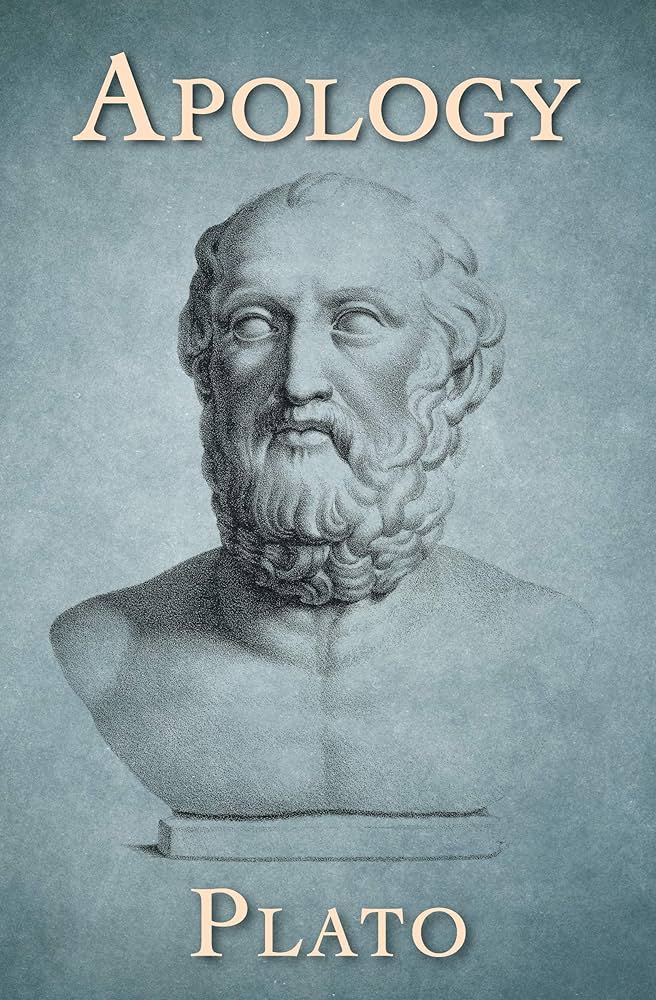
The Apology Plato Summary: A Comprehensive Analysis
Plato • Philosophy, History, Non-fiction
The Apology by Plato – Book Summary, Characters, and Analysis
The Apology by Plato is a foundational work of Western philosophy and a powerful account of the trial of Socrates, one of history’s most influential thinkers. As one of the most important Platonic dialogues and a foundational philosophical dialogue from ancient Greece, it is written as a courtroom defense speech and explores themes of truth, morality, justice, civic duty, and the examined life.
This article provides a detailed book summary, a clear overview of the characters, and an in-depth analysis of Plato's Apology—both a historical account and a philosophical text within the Platonic dialogues—to help readers understand its philosophical significance and lasting impact.
Book Summary of The Apology by Plato
The Apology presents the speech Socrates makes as his formal defense during his trial in Athens in 399 BCE. The term “apology” here does not mean an expression of regret, but rather a defense rather than an apology. Plato structures the work as a series of speeches delivered by the man called Socrates before an Athenian jury, responding to charges that threaten his life.
Socrates is accused of two main crimes: corrupting the Athenian youth and impiety—specifically, failing to acknowledge the gods recognized by the city and introducing new gods. He begins his initial defense by addressing long-standing prejudices against him, which he claims are more dangerous than the formal accusations. These include the widespread belief that Socrates is a sophist who uses clever arguments to deceive people and undermine traditional values, thus bringing Socrates into conflict with traditional beliefs in Athens.
To counter this image, Socrates recounts the story of the Oracle at Delphi. According to his friend Chaerephon, the oracle declared that no one was wiser than Socrates. Perplexed by this claim, Socrates set out to test its meaning by questioning politicians, poets, and craftsmen—individuals widely regarded as wise. Through these conversations, he discovered that while they believed themselves knowledgeable, they could not adequately explain or defend their claims. Socrates concludes that his wisdom lies in recognizing his own ignorance, whereas others falsely believe they possess wisdom. Socrates is called the wisest man because he recognizes his own ignorance and does not think oneself wise. Socrates emphasizes the limits of human wisdom compared to divine wisdom.
Socrates says that he has always acted in accordance with his philosophical mission. He was committed to practicing philosophy as a way of life, questioning and exploring the nature of human beings and their limitations. Socrates' questioning attracted many young men who followed him and emulated his methods, which made his influence on the Athenian youth controversial to his accusers. Socrates makes several arguments to defend his conduct and philosophy. Socrates attempts to justify his actions and explain his motives to the jury.
Socrates argues that this practice of questioning was not an act of corruption but a public service commanded by the god Apollo. By challenging false wisdom, he sought to encourage moral self-examination and intellectual humility among fellow citizens. Socrates likens himself to a gadfly sent to stir Athens from complacency, insisting that his role is essential for the city’s moral health.
Addressing the charge of corrupting the youth, Socrates dismantles the logic of the accusation. He argues that corruption would be irrational, as harming those around him would ultimately harm himself. Furthermore, he challenges his accusers to identify who supposedly improves the youth if he alone corrupts them, exposing the weakness and inconsistency of their claims. Socrates turns the tables on his accusers by exposing their inconsistencies. Socrates asks Meletus probing questions to expose contradictions in the accusations.
On the accusation of impiety, Socrates points out the contradiction in being accused both of atheism and of introducing new divine beings. Socrates was accused of not believing in the gods recognized by the city and of introducing new gods. He asserts his belief in divine signs, particularly his personal “daimonion,” an inner voice that warns him against wrongdoing, reinforcing his claim that he is deeply religious in his own way. Socrates' daimonion was seen as a form of prophetic power guiding his actions. Socrates adds that his prophetic power, or daimonion, guides his actions and affirms his piety.
Socrates acknowledges his own ignorance and the limits of human wisdom. He considers the moral implications of his actions and the charges against him, emphasizing that true wisdom is not thinking oneself wise.
After the jury delivers a guilty verdict, the trial moves to the sentencing phase. Socrates began by refusing to propose a punishment that would imply guilt. Socrates refused to suggest exile as a punishment, remaining true to his principles. Instead of suggesting exile or imprisonment, Socrates jokingly suggests that he should be rewarded with free meals for his service to the city. When asked to propose an alternative sentence to the death penalty, Socrates proposed a fine as an alternative to the death penalty. Ultimately, the jury sentences Socrates to the death penalty after delivering a guilty verdict.
In his final speech, Socrates addresses both his supporters and those who condemned him, referring to them as men of Athens and fellow Athenians. He expresses no fear of death, arguing that death is either a peaceful sleep or a transition to another place where one can continue philosophical inquiry. Socrates stoically accepts the death sentence, showing no fear of death. He maintains that a good person cannot be truly harmed, in life or death, and urges his followers to prioritize virtue over wealth or reputation.
The Charges Against Socrates
The charges brought against Socrates stemmed from deep-seated suspicions and longstanding misconceptions within Athenian society. Socrates claims that he was accused of corrupting the youth of Athens and showing impiety toward the city’s traditional gods. However, Socrates believes these accusations were rooted in misunderstandings about his philosophical mission and the nature of his teachings. He points out that his efforts to encourage critical thinking and the pursuit of wisdom among the youth of Athens were misinterpreted as subversive or dangerous.
Socrates speaks candidly about the influence of public opinion, noting that the negative image of him was shaped in part by the playwright Aristophanes, who lampooned him as a corrupter and blasphemer in his comedic plays. Socrates argues that these portrayals contributed to a climate of suspicion and made it easier for his accusers to bring formal charges. He further points out that the allegations against him were not new, but rather the result of years of slander and misinformation spread by those who felt threatened by his questioning of established norms. Ultimately, Socrates insists that his true aim was not to corrupt, but to inspire the youth of Athens to think for themselves and seek genuine wisdom.
Characters in The Apology by Plato
Socrates
The central figure and speaker of the dialogue is the philosopher Socrates. Socrates presents himself as a devoted seeker of truth and moral integrity. Calm, ironic, and unyielding, he embodies the philosophical life and accepts death rather than compromise his principles.
Meletus
One of Socrates’ main accusers, representing the formal charges against him. Meletus is portrayed as inconsistent and ill-prepared, serving as a symbol of unexamined authority and shallow moral judgment.
The Athenian Jury
A collective character representing Athenian democracy and public opinion. The jury’s reactions highlight the tension between philosophy and politics.
Chaerephon
A friend of Socrates who consulted the Oracle at Delphi. Though absent from the trial, his role is crucial in initiating Socrates’ philosophical mission.
Socrates Defense Strategy
Socrates’ defense strategy was grounded in his unwavering commitment to truth and philosophical integrity. Socrates tells the jury that he will not resort to rhetorical tricks or emotional manipulation, but will instead present his case with honesty and directness. Socrates concluded that the only proper defense was to remain true to his principles, even if it meant risking the jury’s disfavor. He acknowledges that his approach may not win him sympathy, but insists that it is the only way to uphold justice and the values he holds dear.
Throughout his defense, Socrates proceeds to question his accusers, especially Meletus, exposing inconsistencies and logical flaws in their arguments. Socrates explains that his method of questioning—often referred to as the Socratic method—is not meant to be confrontational, but is designed to uncover the truth and promote understanding. He insists that he does not claim to be wise, but is acutely aware of his own ignorance, which he sees as the foundation of true wisdom. Socrates argues that the unexamined life is not worth living, emphasizing that his philosophy is about encouraging others to reflect on their own beliefs and actions. In this way, Socrates’ defense becomes not just a response to the charges, but a powerful affirmation of the philosophical life.
Analysis of The Apology by Plato
Major Themes
The Examined Life
One of the most famous ideas in philosophy emerges from The Apology: “the unexamined life is not worth living.” Socrates argues that constant self-questioning and moral reflection are essential to a meaningful human existence.
Wisdom and Ignorance
Plato contrasts true wisdom with false knowledge. Socratic wisdom lies in recognizing the limits of one’s understanding, while arrogance stems from the illusion of knowledge.
Justice vs. Public Opinion
The trial exposes the danger of majority rule when guided by fear, prejudice, or misunderstanding. Socrates prioritizes moral truth over social approval.
Moral Courage
Socrates’ refusal to abandon philosophy, even under threat of death, illustrates ethical consistency and personal integrity.
Philosophical Style and Literary Form
The Apology blends rhetoric and philosophy. Plato uses logical argument, irony, and direct address to engage readers while modeling the Socratic method. The dialogue’s courtroom setting heightens its dramatic and ethical intensity.
Author Background and Historical Context
Plato was a student of Socrates and one of the most influential philosophers in Western history. Writing in the aftermath of Socrates’ execution, Plato sought to preserve his teacher’s ideas and defend his legacy. The Apology reflects the political instability of post-war Athens and the fragile relationship between philosophy and democracy.
The Apology by Plato: Impact, Legacy, and the Death Penalty
The Apology has shaped philosophical thought for over two millennia. It remains a cornerstone text in ethics, political philosophy, and education, influencing thinkers from the Stoics to modern defenders of free speech and intellectual freedom.
Who Should Read The Apology by Plato
- Students of philosophy and ethics
- Readers interested in classical Greek thought
- Those exploring freedom of speech and moral courage
- Anyone seeking insight into the foundations of Western philosophy
Level up your reading with Peech
Boost your productivity and absorb knowledge faster than ever.
Start now