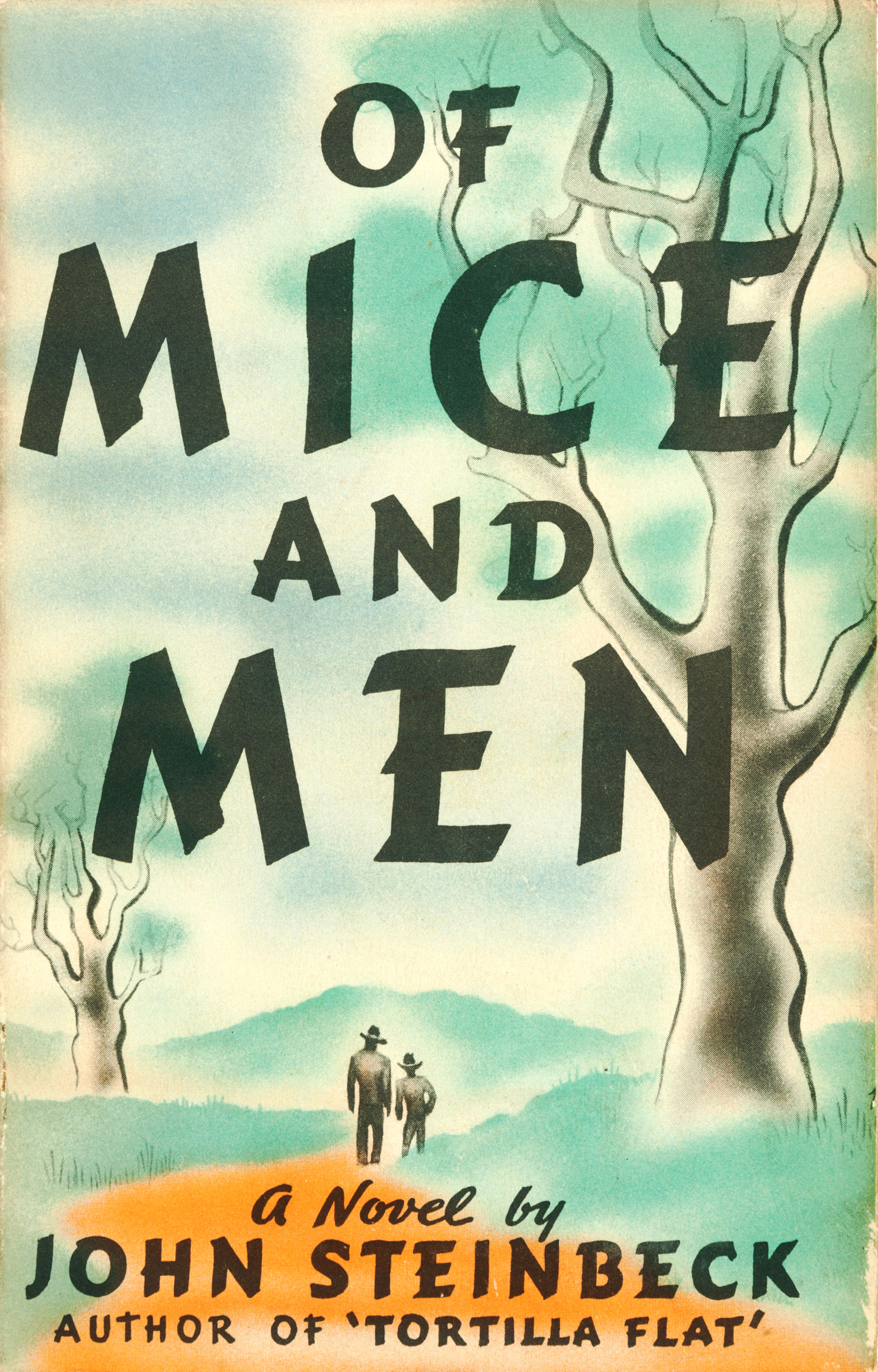
Of Mice and Men Summary
John Steinbeck • Novella
Of Mice and Men by John Steinbeck Summary: Book Characters and Analysis
Of Mice and Men by John Steinbeck is a tragic novella set during the Great Depression that explores friendship, loneliness, power, and the fragile promise of the American Dream. Through the story of two migrant workers bound together by loyalty and shared aspiration, Steinbeck examines how economic hardship magnifies human vulnerability and narrows the possibility of fulfillment. Steinbeck's characters embody universal themes of loneliness, dreams, and human fragility.
Introduction to the Novel
Of Mice and Men, penned by John Steinbeck, immerses readers in the world of two migrant workers, George Milton and Lennie Small, as they navigate the unforgiving landscape of the Great Depression. Set near the Salinas River in California, the novella introduces George—a quick-witted man with strong features—and Lennie, a huge man whose childlike innocence and fascination with soft things set the stage for both hope and heartbreak. Together, these two men cling to a shared dream: to one day own a piece of land, a modest farm where Lennie can tend rabbits and they can escape the relentless cycle of ranch work.
Steinbeck’s honest writing brings to life a cast of supporting characters whose own struggles mirror the central themes of loneliness and broken dreams. Candy, the aging ranch handyman who has lost his hand, yearns for belonging and security. Curley’s wife, desperately lonely and unnamed, seeks connection in a world that dismisses her. Crooks, the black stable hand, endures isolation shaped by both race and circumstance, while Curley, the boss’s son, asserts his authority through aggression.
Throughout the story, Steinbeck uses powerful symbolism—the ever-present mice Lennie loves, the red pony, and the dream of soft things—to underscore the fragility of hope. The ranch becomes a microcosm of Depression-era America, where every character is haunted by empty dreams and the longing for true friendship.
As the narrative unfolds, tragedy strikes when Lennie accidentally kills Curley’s wife, setting off a chain of events that leads to a lynch mob and forces George to make an agonizing choice to protect Lennie from a cruel fate. In the end, the story of George and Lennie stands as a poignant reminder of the human need for connection and the devastating consequences when dreams are shattered. Steinbeck’s Of Mice and Men endures as a testament to the power of honest storytelling and the timeless search for dignity and belonging amidst hardship.
Book Summary of Of Mice and Men
The story opens along the Salinas River in California, where George Milton and Lennie Small, two displaced ranch workers, prepare to begin a new job. As the men arrive at a nearby ranch, the atmosphere is tense with anticipation. Lennie, with his bear drags and slender arms, carries a dead mouse in his pocket, revealing his love for soft things and small animals. George, with restless eyes, watches over Lennie, whose pale eyes reflect innocence and vulnerability. Their dynamic is immediately clear: George is small, quick-witted, and cautious; Lennie is physically powerful but intellectually disabled, dependent on George for guidance and protection. Their relationship is unusual in a world defined by isolation. They travel together not only for survival, but because they share a dream.
That dream—to own a small farm, their own piece of land, and “live off the fatta the lan’”—sustains them emotionally. It represents autonomy in a system where migrant ranch hands move from job to job without permanence or dignity. The dream is modest, yet transformative: a space free from exploitation, humiliation, and fear. George asks Lennie to describe their dream, and George tells Lennie that one day they will have their own farm. George retells the story often, reassuring Lennie about their future. When Candy learns of their plan, Candy reluctantly agrees to contribute his savings, hoping to join them in owning their own land.
Upon arriving at the ranch, George warns Lennie to stay out of trouble, recalling a previous incident in which Lennie grabbed a woman's dress, leading to misunderstanding and violence. This pattern foreshadows the inevitability of tragedy: Lennie’s own strength, coupled with his lack of control, repeatedly places both men at risk. Lennie thinks about their dream often, and tells Lennie about the rabbits he hopes to tend. The ranch is populated by other men and other characters equally burdened by loneliness. Candy, an aging worker, fears becoming useless after witnessing the execution of Candy's dog—a scene that parallels later events with chilling clarity. Carlson complains bitterly about Candy's dog before shooting it. Crooks, the Black stable hand, is segregated and excluded, his isolation shaped by racism as well as circumstance. Lennie tells Crooks about the dream, seeking connection. The ranch foreman oversees the ranch hands, while the boss's son, Curley, is quick to prove himself through conflict.
Curley's wife enters the barn, her presence stirring tension among the men. Curley's wife, who once dreamed of becoming a movie star, is unnamed and dismissed, trapped in gendered confinement, yearning for recognition in a male-dominated space. Her loneliness and unmet dreams are palpable as she interacts with Lennie and the other men.
The tension escalates when Lennie accidentally breaks Curley's wife's neck while attempting to silence her cries; she is accidentally killed in the process. The act is unintentional, yet irreversible. A mob of other men forms, motivated by vengeance rather than justice. George hears the commotion and knows that Lennie will not receive mercy if captured. George wrestled with the decision, but ultimately, when he finds Lennie hiding by the riverbank, George returns to him. In the novella’s final scene, George leads Lennie back to the riverbank, recreating the setting of the opening chapter. George retells their dream one last time, and tells Lennie about their future together, before making the painful decision to kill Lennie. George uses Carlson's gun to shoot Lennie in an act of tragic compassion. George’s decision mirrors the earlier killing of Candy’s dog—but unlike that moment, this act is driven by love rather than convenience.
The novella ends with George emotionally fractured, having sacrificed the one relationship that gave his life meaning, while the other ranch hands and other characters return to their lonely routines, each relying on their own strength to endure.
Main Characters in Of Mice and Men
George Milton
Intelligent and pragmatic, George balances irritation with devotion. His dream of independence masks deeper needs for connection and purpose. His final act reflects both love and surrender to circumstance.
Lennie Small
Physically imposing yet emotionally childlike, Lennie embodies innocence without awareness. His inability to control his strength becomes the novella’s central tragic mechanism.
Candy
An aging ranch hand terrified of obsolescence. Candy’s attachment to the dream reveals how hope becomes more urgent as options diminish.
Crooks
The stable worker isolated by racism. Cynical yet perceptive, Crooks articulates the emotional toll of exclusion more explicitly than any other character.
Curley’s Wife
Unnamed throughout the novella, she is defined by her relational role rather than individuality. Her loneliness parallels the men’s, though expressed through different social constraints.
Curley
The ranch owner’s son. Aggressive and insecure, Curley asserts dominance to compensate for perceived inadequacy.
Analysis of Of Mice and Men
Major Themes
The Fragility of the American Dream
Steinbeck presents the dream of land ownership as both sustaining and illusory. Economic forces and human limitations conspire against its realization.
Loneliness and Isolation
Nearly every character is alone—emotionally, socially, or structurally. The ranch becomes a microcosm of Depression-era alienation.
Power and Vulnerability
Physical strength, economic status, race, and gender all shape hierarchies on the ranch. Those with the least institutional power suffer the most.
Mercy vs. Justice
George’s final act raises ethical ambiguity. Mercy becomes indistinguishable from violence in a world where systems offer no humane alternative.
Symbolism and Literary Devices
- The dream farm symbolizes autonomy and dignity
- Candy’s dog foreshadows Lennie’s fate
- The riverbank frames the narrative cycle
- Soft objects represent innocence and danger
- Natural imagery contrasts with human brutality
Steinbeck’s spare prose heightens emotional intensity. Dialogue carries philosophical weight, while repetition reinforces inevitability.
Author Background and Historical Context
John Steinbeck wrote during the Great Depression, a period marked by economic displacement and labor instability. His work often centers on marginalized individuals navigating structural hardship. Of Mice and Men reflects both the material conditions of the 1930s and the timeless vulnerability of hope.
Of Mice and Men: Impact and Legacy
The novella remains a cornerstone of American literature, widely studied for its exploration of economic inequality, friendship, and moral complexity. Its brevity intensifies its tragedy, making its themes accessible yet enduring.
Who Should Read Of Mice and Men by John Steinbeck
- Readers interested in American realism
- Students studying the Great Depression
- Those exploring friendship and moral choice
- Readers drawn to tragic, character-driven narratives
Level up your reading with Peech
Boost your productivity and absorb knowledge faster than ever.
Start now