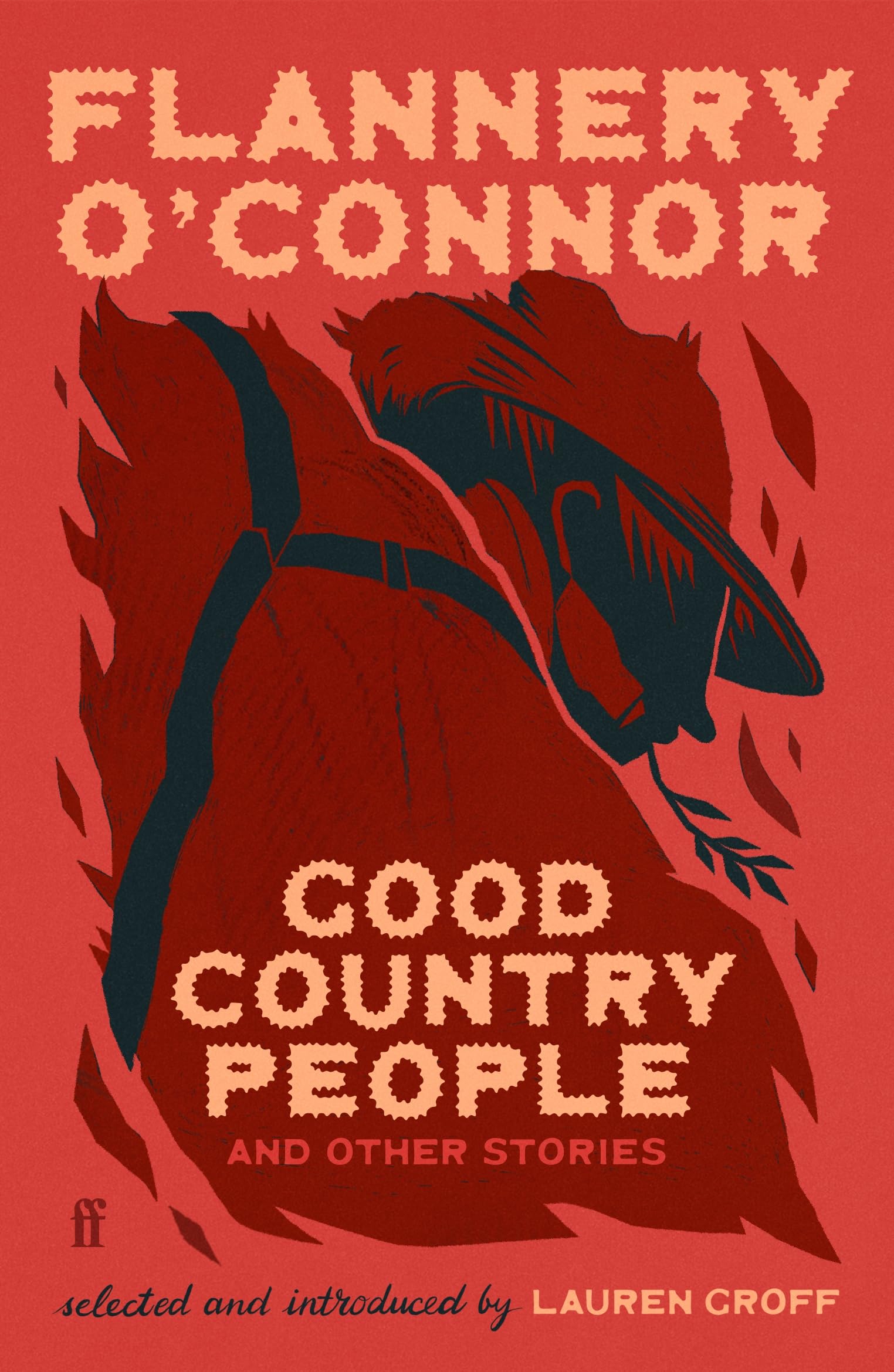
Good Country People Summary
Flannery O'Connor • Short story
Good Country People Summary: Book, Characters, and Analysis by Flannery O’Connor
Good Country People by Flannery O’Connor is a Southern Gothic short story that explores pride, deception, intellectual arrogance, and spiritual emptiness. First published in Harper's Bazaar, the story holds cultural and literary significance, examining the illusion of moral superiority—whether rooted in religious sentimentality or intellectual nihilism—and exposing the vulnerability that lies beneath self-certainty.
Through irony and psychological tension, Flannery O'Connor, renowned for her daring Southern Gothic style and exploration of human hypocrisy and morality, constructs a narrative in which identity, belief, and control collapse under confrontation with reality. O'Connor's reputation as a profound storyteller is evident throughout the story.
Introduction to the Story
“Good Country People” stands as one of Flannery O’Connor’s most celebrated short stories, exemplifying her mastery of Southern Gothic fiction and her keen insight into the complexities of human nature. First published in 1955, this story is a cornerstone of O’Connor’s complete stories and showcases her ability to blend dark humor with profound philosophical questions. Set in the heart of the American South, the narrative unfolds on a rural farm where issues of morality, religious faith, and social class intersect in unexpected ways.
At the center of the story is Hulga Hopewell, a young woman whose life was irrevocably changed by a childhood hunting accident that left her with a wooden leg. Hulga’s physical disability becomes a defining aspect of her identity, shaping her interactions with her mother, Mrs. Hopewell, and the world around her. Despite her academic achievements and intellectual superiority—she holds a PhD in philosophy—Hulga struggles to reconcile her rational worldview with the emotional and spiritual complexities of life.
The arrival of Manley Pointer, a seemingly innocent Bible salesman, disrupts the fragile equilibrium of the Hopewell household. Manley’s charm and apparent simplicity quickly earn him the trust of Mrs. Hopewell, who prides herself on recognizing “good country” people. However, beneath his polite exterior, Manley harbors motives that challenge the assumptions of those around him, particularly Hulga’s belief in her own detachment and control.
O’Connor wrote “Good Country People” with a sharp eye for the contradictions of the modern world, using the interactions between Hulga, her mother, and the traveling Bible salesman to explore deeper questions about authenticity, vulnerability, and the search for meaning. The story’s Southern setting is not merely a backdrop but an active force, reflecting the traditions, prejudices, and religious fervor that shape the characters’ lives.
Through her precise and evocative prose, O’Connor invites readers to look beyond surface appearances and confront the uncomfortable truths that lie beneath. “Good Country People” remains a vital part of twentieth-century American literature, offering a nuanced portrait of faith, deception, and the enduring struggle to understand oneself and others. Whether encountered as a standalone story or within O’Connor’s larger body of work, it continues to provoke thought and discussion among readers and scholars alike.
Book Summary of Good Country People
The story centers on Mrs. Hopewell, a widowed farm owner who prides herself on common sense and polite social order. Hopewell owns the farm and manages it with a sense of authority, often relying on her status as a landowner. Hopewell and Mrs. Freeman—her tenant and employee—form a partnership rooted in rural convention, with putting Mrs. Hopewell in the role of the self-assured, conventional woman who believes she understands the world. Hopewell believes in the inherent goodness of “good country people,” and hopewell likes to see herself as a judge of character, often inviting guests like the Bible salesman into her home as a sign of hospitality (hopewell invites). Hopewell sees the world through a lens of clichés and superficial judgments, rarely questioning her own assumptions.
She lives with her thirty-two-year-old daughter, Joy, who has renamed herself Hulga as a deliberate rejection of her mother’s values. Joy lost her leg in a childhood accident and now wears a false leg—an artificial leg that is both a literal and symbolic marker of her difference. This joy's wooden leg, also referred to as hulga's leg, is a focal point in the story, representing her physical disability, her vulnerability, and her emotional and intellectual defenses. The wooden part of the prosthesis, especially where the wooden leg joins her body, becomes a symbol of her fractured independence and the illusion of control she maintains over her identity. Hulga is physically crippled, and her weak heart and heart condition further emphasize her fragility and limitations.
Joy is highly educated, holding a Ph.D. in philosophy. She identifies as an atheist and believes she sees through the superficial optimism and platitudes that define her mother’s worldview. Hulga imagines herself as intellectually superior, constructing elaborate fantasies of control and detachment. Hulga feels a deep sense of alienation and vulnerability beneath her cynicism, and hulga pretends to be immune to the illusions that ensnare others. Throughout the story, hulga makes efforts to assert her independence and superiority, but hulga states of mind reveal her underlying insecurities and longing for meaning. Her icy blue eyes are often described as cold and detached, underscoring her emotional distance and sense of blindness.
Mrs. Hopewell frequently uses phrases like “good country people” to categorize others into simplistic moral types, reducing complexity to cliché. She is especially fond of Freeman's daughters, Glynese and Carramae, whom Hulga derides as “Glycerin” and “Caramel” for their sugary, superficial demeanor.
Their daily life is disrupted by the arrival of a traveling Bible salesman, Manley Pointer, a young pointer who presents himself as naïve, devout, and humble. Mrs. Hopewell immediately categorizes him as “good country people,” projecting innocence and sincerity onto him without scrutiny. She sees him as a fine Christian and even a perfect Christian, failing to recognize the potential for bad qualities beneath his surface. The story draws parallels between characters, showing how people are often judged in the same way based on appearances, rather than substance.
Manley begins to focus his attention on Hulga, intrigued by her intellectual disdain and visible disability. Hulga, convinced of her superiority, decides to seduce and intellectually dismantle him as an experiment in exposing religious simplicity. She imagines herself in control, believing she can manipulate him emotionally while proving her philosophical detachment. However, her mind's control is an illusion, and her sense of autonomy over her own life is more fragile than she realizes.
They arrange to meet in the old barn loft. Once isolated, Manley gradually shifts from awkward piety to unsettling authority. He persuades Hulga to remove her glasses and, eventually, her prosthetic leg—her most guarded vulnerability. When she is physically and symbolically disarmed, he reveals that he is neither innocent nor devout. He collects artificial limbs and religious trinkets as trophies of deception, and even produces obscene playing cards hidden inside his hollowed-out Bible. Far from being naïve, he is a practiced manipulator who exploits belief and vulnerability alike. Pointer ignores Hulga’s attempts at rational control, exposing her achieved blindness and spiritual vulnerability.
Hulga is completely unprepared for Manley’s betrayal. Manley steals Hulga’s prosthetic leg and abandons her in the loft, leaving her physically stranded and emotionally exposed. She is left questioning her mind's control and her sense of own life, forced to confront her real innocence and the limits of her intellectual defenses. The story’s themes revolve around the search for a deeper understanding of self and others, the dangers of achieved blindness, and the contrast between outward appearances and hidden realities.
The story ends with Mrs. Hopewell observing Manley leaving the property, still convinced he is a “good man” and “good country people,” unaware of the devastation he has caused. In this way, the narrative critiques the superficial judgments of characters like Mrs. Hopewell and highlights the complexity of innocence, deception, and the human search for meaning.
Main Characters in Good Country People
Hulga (Joy) Hopewell
The intellectual protagonist. Hulga defines herself through negation—against religion, sentimentality, and her mother’s optimism. Her wooden leg symbolizes both her vulnerability and the foundation of her identity. Hulga also exhibits an 'achieved blindness,' a willful ignorance or spiritual blindness that serves as a self-imposed limitation, mirroring her physical vulnerability. Her downfall lies in underestimating the complexity of others.
Mrs. Hopewell
Hulga’s mother. Cheerful, dismissive, and reliant on clichés, Mrs. Hopewell reduces morality to simple categories. Hopewell believes that people can be easily divided into 'good country people' and others, reflecting her naive and simplistic worldview. She represents a superficial optimism that avoids uncomfortable truth.
Manley Pointer
The Bible salesman and antagonist. Charming and predatory, Manley exposes the hypocrisy of both sentimental faith and arrogant disbelief. He embodies manipulation stripped of ideology.
Mrs. Freeman
The tenant farmer’s wife. Observant and quietly intrusive, she functions as a background presence, subtly challenging Mrs. Hopewell’s illusions.
Analysis of Good Country People
Major Themes
Intellectual Pride and Vulnerability
Hulga’s atheism and academic credentials provide her with a sense of superiority, but they do not protect her from humiliation. She believes in her mind's control, convinced that her intellect gives her mastery over her thoughts and emotions. O’Connor suggests that pride—religious or intellectual—creates blindness, and Hulga's illusion of control is ultimately challenged and shattered by her encounter with Pointer.
Faith and Nihilism
The story does not endorse sentimental Christianity, nor does it glorify atheism. Instead, it critiques shallow belief and shallow disbelief alike.
Identity and Embodiment
Hulga’s prosthetic leg symbolizes her constructed identity. Her attachment to the leg reflects her desire to control her own life and assert autonomy, but its removal represents forced exposure and the collapse of self-definition.
Deception and Performance
All major characters perform roles—optimist, intellectual, believer. The story reveals how easily these performances fracture under pressure.
Symbolism and Literary Devices
- The wooden leg symbolizes both fragility and self-image; the 'wooden part' of Hulga's artificial leg also embodies her emotional and intellectual vulnerability, reflecting her hidden insecurities and the betrayal of her rational beliefs.
- The barn loft functions as a false space of romantic revelation
- Religious objects represent commodified belief; the 'obscene playing cards' hidden in the Bible serve as a symbol of deception and moral ambiguity.
- Names (Joy vs. Hulga) reflect identity as rebellion
- Irony operates at structural and thematic levels
O’Connor’s prose is restrained yet sharp, allowing cruelty to unfold without melodrama. Her use of irony forces readers to confront moral discomfort rather than offering resolution.
Author Background and Context
Flannery O’Connor was a Southern Catholic writer whose fiction often examined grace, sin, and spiritual blindness within grotesque or unsettling circumstances. Her work frequently challenges both secular and religious complacency, insisting on moral confrontation rather than comfort.
Good Country People: Impact and Legacy
The story remains one of O’Connor’s most studied works, central to discussions of Southern Gothic literature, religious symbolism, and psychological realism. Its unsettling conclusion continues to provoke debate about belief, pride, and vulnerability.
Who Should Read Good Country People by Flannery O’Connor
- Readers interested in Southern Gothic fiction
- Students studying irony and moral ambiguity
- Those exploring identity and pride
- Readers drawn to psychologically intense short fiction**
Level up your reading with Peech
Boost your productivity and absorb knowledge faster than ever.
Start now