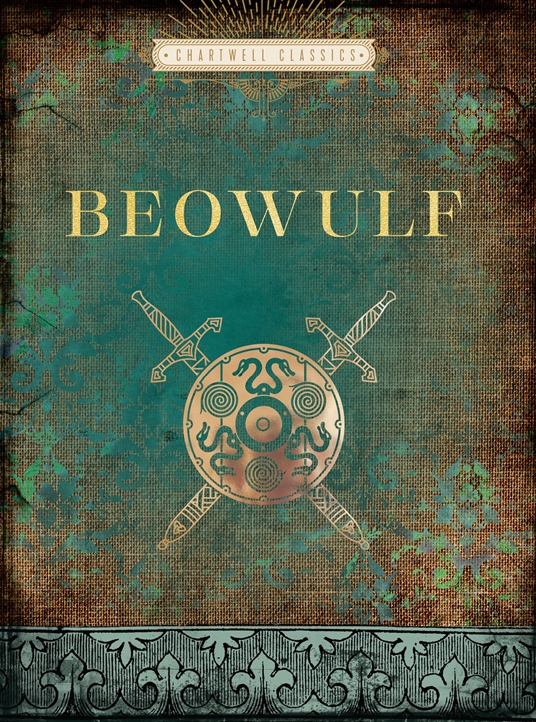
Beowulf Summary
anonymous • Epic heroic writing
Introduction to the Epic Poem
The epic poem Beowulf stands as a monumental achievement in Anglo-Saxon literature, weaving together the legendary exploits of the Geat warrior Beowulf with the rich traditions of early English storytelling. As one of the oldest surviving works in English literature, the poem survives thanks to a precious manuscript now housed in the British Library, a testament to the enduring legacy of these ancient tales. Scholars like Chauncey Brewster Tinker have highlighted how the poem’s historical context is deeply intertwined with the culture and values preserved in the British Library’s collection of Anglo-Saxon manuscripts.
At the heart of the story is King Hrothgar, the mighty Danish king, who constructs a great mead hall called Heorot—a symbol of prosperity and unity for his loyal warriors. This great hall becomes the center of Danish life, where warriors gather for feasts and celebrations. However, their joy is shattered when the evil monster Grendel, a giant creature driven by hatred, begins to raid the mead hall, slaughtering Danish warriors and casting a shadow of fear over the kingdom. The terror inflicted by Grendel sets the stage for the arrival of Beowulf, whose legendary battles against Grendel, Grendel’s mother, and a fiery dragon would come to define the epic poem and secure its place as a cornerstone of English literature.
Beowulf – Epic Poem Summary, Characters, and Analysis
Beowulf is one of the most important works of Old English literature and a cornerstone of the epic poetry tradition. Before it was written down, Beowulf was preserved and transmitted through oral traditions, highlighting the importance of storytelling in maintaining and passing down the legend. Composed between the 8th and early 11th centuries by an unknown author, the poem blends Germanic heroic values with emerging Christian ideals.
This article provides a detailed book summary, a breakdown of key characters, and a focused analysis of Beowulf, highlighting its themes, literary style, and cultural significance.
Book Summary of Beowulf
Beowulf opens in Scandinavia, where the Danish king Hrothgar has built a magnificent mead hall called Heorot, intended as a symbol of prosperity and communal life. However, the hall becomes a place of terror when it is attacked nightly by Grendel, a giant monster descended from Cain. Grendel's raids and Grendel's attacks terrorize the Danes for twelve years, slaughtering Hrothgar’s warriors and leaving them helpless and demoralized.
News of Hrothgar’s suffering reaches Beowulf, a young great warrior from the land of the Geats. Motivated by honor, fame, and loyalty to Hrothgar—who once helped Beowulf’s father—Beowulf sails to Denmark with a group of geatish warriors. Upon arrival, he boldly declares his intention to defeat Grendel with his bare hands, believing that the monster’s strength should be matched with equal fairness. Hrothgar accepts Beowulf's offer to fight Grendel, and Beowulf and his men await the monster's approach.
That night in Heorot, Grendel arrives and attacks as usual, but Beowulf and his men are ready. Beowulf confronts the monster and fight Grendel in brutal hand-to-hand combat. Using only his bare hands, Beowulf rips off Grendel's arm from its socket, mortally wounding the creature. Grendel flees to his lair and dies, while the Danes celebrate Beowulf's victory as a hero. The severed arm is displayed as a trophy, symbolizing the restoration of order.
A great feast is held in Heorot, where the king's thanes and geatish warriors celebrate Beowulf's victory. Hrothgar presents Beowulf with great treasure, including a golden cup, as a reward for his heroism.
The victory is short-lived. Grendel's mother, seeking revenge for her son's death, attacks Heorot the following night, killing one of Hrothgar’s closest advisors. Determined to finish the task, Beowulf enters the underwater cave where Grendel's mother dwells. Beowulf dives into the lake to reach her lair. Armed with the sword Hrunting, given to him by Unferth, Beowulf finds that the weapon fails him in battle. He then resorts to a short sword forged by giants to fight and kill Grendel's mother. Discovering Grendel’s corpse in the lair, Beowulf beheads it and brings back Grendel's head as a trophy.
Beowulf takes Grendel's head and treasure back to Heorot, where he is again rewarded with great treasure, including a golden cup among the gifts.
After being richly rewarded, Beowulf returns home to Geatland, where he is welcomed by King Hygelac, the great king of the Geats. The poem then shifts forward several decades. Beowulf has become a mighty king and great warrior, ruling wisely and peacefully for fifty winters.
However, his final challenge arises when a dragon, angered by the theft of a golden cup from its dragon's hoard and dragon's treasure trove in the dragon's lair, begins to devastate the countryside.
Despite his old age, Beowulf chooses to confront the dragon himself. During the battle, beowulf's men and geatish warriors mostly flee in fear, leaving only Wiglaf, a young thane, to stand by his king. Together, they achieve Beowulf's victory over the dragon, but Beowulf is mortally wounded by its venom. Beowulf dies from his wounds, marking Beowulf's death.
As he dies, Beowulf laments his lack of an heir, referencing his son's death or absence, and takes comfort in the legacy he leaves behind. He entrusts the future of his people to Wiglaf. The poem ends with Beowulf’s funeral, as his people mourn the loss of a mighty king and great warrior and fear for the uncertain future without his protection.
Throughout his life, Beowulf recounts his past deeds, including the time he killed nine sea monsters and other sea monsters during his adventures.
Main Characters in Beowulf
Beowulf
The hero of the epic, Beowulf embodies the ideals of the warrior culture: strength, courage, loyalty, and honor. His journey from ambitious young hero to self-sacrificing king illustrates the responsibilities of leadership and the cost of heroism.
Hrothgar
King of the Danes and builder of Heorot. Hrothgar represents an aging ruler who depends on younger heroes for protection. He serves as a moral guide to Beowulf, warning him against pride.
Grendel
A monstrous outcast who attacks Heorot out of hatred for human joy and community. Grendel symbolizes chaos, isolation, and evil.
Grendel’s Mother
A vengeful and powerful figure driven by maternal duty. She represents the cycle of revenge that defines much of the heroic world.
The Dragon
An embodiment of greed, destruction, and inevitable death. The dragon serves as Beowulf’s final adversary and a reminder of human mortality.
Wiglaf
A loyal warrior who remains with Beowulf in his final battle. Wiglaf represents the ideal of loyalty and the hope for continuity after Beowulf’s death.
Analysis of Beowulf
Major Themes
Heroism and Honor
Beowulf celebrates heroic deeds and the pursuit of fame as a way to achieve immortality through memory. Reputation and honor define a warrior’s worth.
Fate and Mortality
The poem emphasizes the inevitability of death. Even the greatest hero cannot escape fate, and Beowulf’s final battle underscores the limits of human strength.
Loyalty and Community
The contrast between loyal figures like Wiglaf and the cowardly warriors who flee highlights the importance of allegiance in warrior culture.
Good vs. Evil
The battles against Grendel, his mother, and the dragon reflect an ongoing struggle between order and chaos.
Literary Devices and Writing Style
Beowulf uses alliteration, kennings, and elevated language typical of Old English poetry. The poet frequently interrupts the narrative with historical digressions, reinforcing themes of legacy and remembrance.
Author Background and Historical Context
The author of Beowulf is unknown. The poem was composed in Anglo-Saxon England and reflects a blend of pagan warrior values and Christian moral perspectives. Though set in pre-Christian Scandinavia, the narrative is shaped by a Christian worldview that emphasizes divine justice and humility.
Beowulf: Impact and Legacy
Beowulf remains one of the most studied and influential epic poems in Western literature. Its themes of heroism, leadership, and mortality have inspired countless adaptations and continue to shape modern fantasy and heroic storytelling.
Who Should Read Beowulf
- Readers interested in epic poetry and heroic literature
- Students of medieval or Old English literature
- Fans of mythology, legends, and fantasy
- Anyone exploring early concepts of leadership and legacy
Level up your reading with Peech
Boost your productivity and absorb knowledge faster than ever.
Start now